


Interior geometry shapes how you experience a home long before you notice furniture or decoration. Proportion, alignment, and circulation determine how a space supports your daily rhythm and sense of ease. Working with a Chicago interior designer means engaging these structural relationships early, where decisions about scale and layout influence everything that follows. Alice Benjamin Interiors approaches each project through this lens, treating space as a disciplined framework shaped by how you live, move, and interact with your surroundings.
As an interior decorator in Chicago, my focus remains on clarity rather than excess. You benefit most from interiors where architecture and design move in alignment, creating spaces that feel composed and intentional. This article examines how architectural geometry supports refined living through balance, proportion, and material continuity. It also outlines how luxury interior design and modern classic interior design principles come together to create homes that reflect both structure and personal identity.
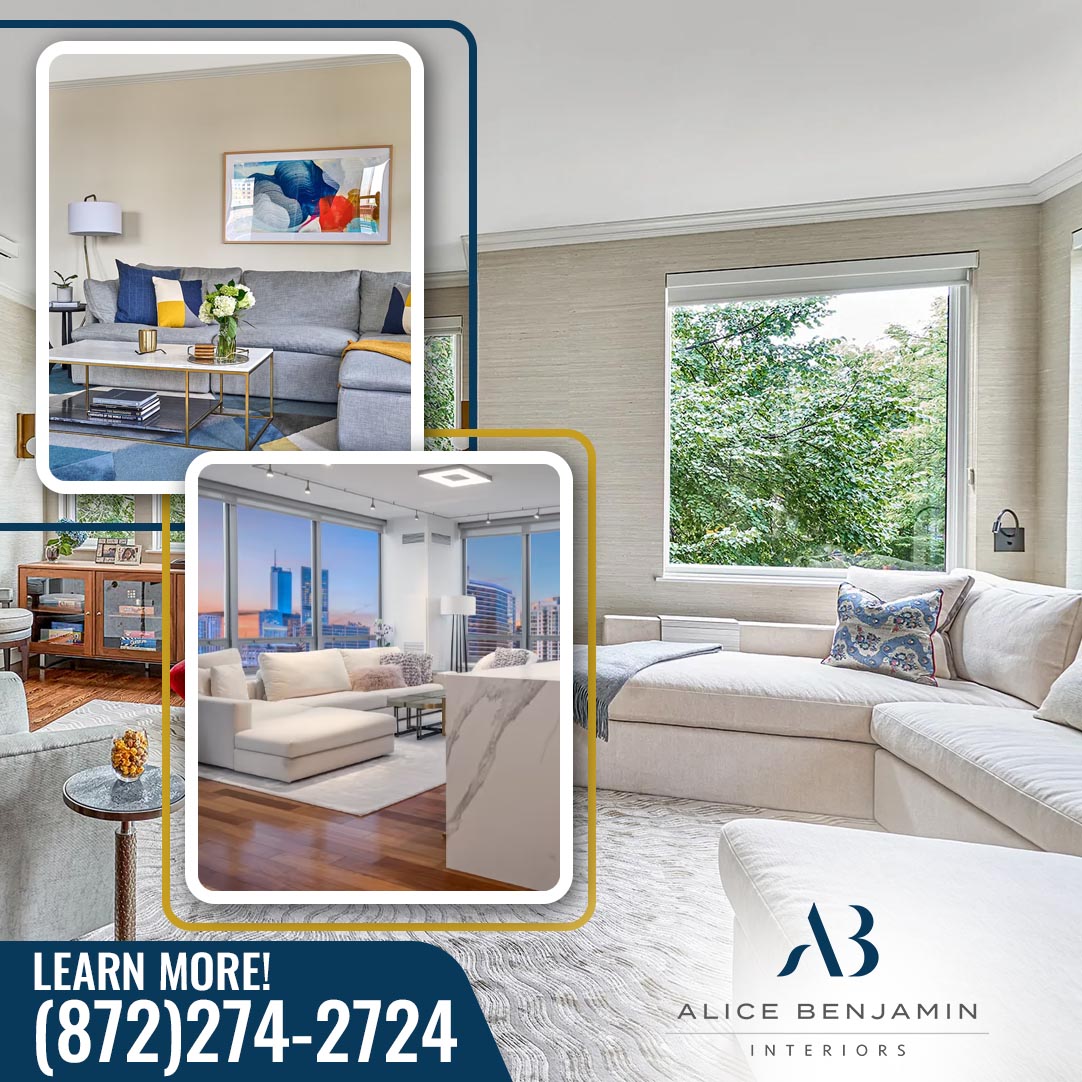
Spatial geometry defines how architectural proportions, lines, and volumes influence movement and perception inside a home. It determines how a space is experienced before furniture or decoration is introduced. It is based on proportion, scale, alignment, and circulation patterns.
An interior designer often starts with spatial geometry because it informs how every later decision connects back to structure. Layout planning, material selection, and lighting placement all rely on these early spatial relationships.
Rooms with unclear proportions or weak circulation often feel unsettled, even after detailed furnishing. Human perception responds strongly to spatial order, especially in private residential environments. Research in environmental psychology consistently shows that spatial clarity influences perceived comfort and usability in built environments, particularly in homes where occupants spend extended periods indoors.
Architecture establishes structure, while interior design refines how that structure is experienced in daily life. Architecture defines fixed elements such as walls, ceilings, and openings. Interior design services interpret these elements through material selection, layout planning, and furnishing decisions.
In practice, you can see this relationship most clearly in how a room is used. A structurally balanced space allows interior elements to sit naturally within it, without forcing visual correction or compensating for awkward proportions. A well-aligned interior reads as cohesive because it follows the logic already present in the architecture.
Balance and proportion regulate how visual weight is distributed across a space. Modern classic interior design depends on measured relationships between objects, surfaces, and architectural lines. Visual rhythm emerges through repetition, alignment, and continuity rather than decorative accumulation.
An interior decorator working in this design approach often prioritizes restraint in placement and proportion. That restraint allows architectural features to remain visible and legible.
This approach typically includes:
These decisions create visual continuity without adding unnecessary complexity, allowing the architecture to remain the primary structure of the interior.
Spatial planning determines how efficiently a home supports movement, use, and daily routines. A well-structured layout reduces unnecessary movement between functional zones and supports smoother transitions between activities such as cooking, resting, and working.
Strong spatial planning connects directly to luxury interior design outcomes because it supports both functional clarity and long-term usability.
Architectural harmony refers to the consistent alignment of structure, materials, and spatial relationships within luxury interior design. Harmony develops through consistency across architectural decisions. You notice it in how walls relate to ceilings, how openings frame views, and how materials carry from one space to another without disruption.
It supports a sense of order that feels natural rather than imposed. Harmony is present when no single element disrupts the visual or functional flow of a home. It relies on continuity rather than decoration.
Symmetry and alignment create visual stability and help guide movement through a space. You feel this stability in how furnishings sit within architectural boundaries. Luxury interior design often applies symmetry with restraint. The goal is not repetition for its own sake, but a measured balance that supports calm visual reading of a room.
Ceiling lines and sightlines shape how connected or segmented a space feels. When architectural elements align across rooms, your eye moves without pause. This continuity strengthens spatial clarity and allows each area to relate to the next without visual interruption. An interior designer often uses this relationship to unify diverse layouts within city residences.
Material consistency supports continuity between rooms while maintaining subtle variation in texture and tone. Stone, wood, and metal carry visual weight across a home. Repetition of these materials builds familiarity, while controlled variation prevents monotony. You experience cohesion through shared material language rather than identical finishes.
Texture, light, and form define depth and atmosphere within luxury interior design. Natural materials shift in appearance throughout the day as light changes. This interaction creates variation without altering structure.
Lighting supports this effect through three layers:
Quiet visual cohesion is achieved when every element supports a unified architectural direction without visual distraction. You see this principle most clearly in modern classic interior design, where restraint allows structure and material quality to remain visible. The result is a space that feels steady, composed, and intentional.
Interior design services structure how a home is planned, sourced, and executed from concept through completion. You engage in a process that begins with how you live, not just how a space looks on paper. Each stage builds on the previous one, so choices in layout, materials, and furnishings remain connected rather than isolated. This approach supports residential projects where multiple decisions need coordination across design, construction, and sourcing.
These services translate architectural space into functional and visually aligned environments. A great designer uses architecture as a starting point, then shapes it through proportion, texture, and spatial flow. The goal is not to fill rooms, but to guide how each area supports movement, comfort, and visual clarity across the home.
Full-service interior design manages all phases of a project, maintaining consistency from planning to installation. You work through one continuous process rather than fragmented stages. This approach is often chosen for luxury interior design projects that require coordination across contractors, suppliers, and fabrication teams.
Typical phases include:
Kitchen and bathroom design focuses on spatial efficiency, material durability, and functional clarity. You design these spaces around movement patterns, storage needs, and long-term use. Plumbing layouts and appliance placement guide the structure of each decision.
Custom furnishings allow interior proportions to align precisely with architectural conditions. You select furnishings that respond to ceiling height, room scale, and circulation paths rather than relying on standard sizing. Interior design services often introduce curated materials to maintain consistency across rooms.
Common materials include:
Personalized design supports long-term functionality by aligning interiors with the way a client lives rather than short-term design cycles. You experience a home that adapts to routines, priorities, and lifestyle changes over time. This approach remains central to luxury interior design, where longevity and refinement guide each decision.
At Alice Benjamin Interiors, this method shapes every project, connecting structure, function, and personal expression through disciplined design practice.
Modern classic interior design combines traditional architectural proportion with contemporary restraint and material clarity. You see this balance most clearly in homes where original moldings or structural details remain present, yet the overall space feels lighter and more current. You avoid visual conflict by letting architecture lead, while furnishings support function and daily use. This is where interior design services often shift from decoration to interpretation of space.
This approach is widely used by a Chicago interior designer due to the city’s mix of historic and contemporary residential architecture.
This design approach integrates classical structure with modern simplicity to create balanced interiors. You notice this in how rooms feel grounded without feeling heavy. Classical proportions remain visible, but furniture and finishes carry a quieter presence. You gain continuity between old and new without forcing either direction. Historic architectural features are preserved while contemporary furnishings introduce clarity and usability.
Designing for natural light improves spatial perception and reduces reliance on artificial lighting during daytime hours. You experience this through shifting daylight that changes how materials read across the day. Light becomes part of the design language, not just illumination. In Chicago, seasonal variation in daylight makes lighting strategy a key factor in residential planning. You plan for contrast, softness, and direction so each room maintains visual balance year-round.
Restraint emphasizes material quality and architectural form rather than volume of decoration. You notice restraint in spaces where fewer elements carry more visual weight. Surfaces, textures, and proportions define the room instead of decorative layering. This principle is central to luxury interior design, where fewer elements often create stronger visual clarity.
Tailored interior design responds to individual lifestyle needs and architectural conditions within each residence. You see this most clearly in homes that require adaptation rather than repetition of a fixed style. Each structure carries different limitations and opportunities that shape the design response. An interior decorator in Chicago often works across varied building types, requiring adaptive design strategies rather than fixed formulas.
Alice Benjamin Interiors, based in Chicago, Illinois, provides interior design services focused on spatial clarity, material refinement, and personalized residential environments. I design with attention to how rooms connect, how materials interact, and how each element supports a cohesive environment. Your home becomes a reflection of both structure and lifestyle, shaped through careful planning rather than impulse.
The studio applies a structured process that aligns architecture, function, and lifestyle requirements within luxury interior design projects. I guide each phase with steady coordination, so your project moves from concept to completion with consistency and clear direction.
Each design is shaped by how a client lives, not only by visual preferences. I observe how you move through your space, how you use each room, and how your routines define comfort. That insight informs every layout and material choice.
Daily routines and functional needs guide decisions across layout, materials, and furnishings. I translate those patterns into interiors that feel personal without relying on excess detail or decoration.
The design process follows structured stages to maintain clarity and execution accuracy. I move through each stage with measured coordination, allowing the project to develop with consistency and purpose.
The stages include:
1. initial discovery and evaluation
2. design development and refinement
3. sourcing and procurement
4. installation coordination and styling
The studio provides full-service residential interior design across Chicago. I support you through complete interior design services that address both architectural planning and interior execution.
These interior design services include interior design planning, kitchen and bathroom design, custom furnishings, vacation home design, and virtual design consultations.

You begin with a conversation that clarifies how your space should support your life and long-term goals. Alice Benjamin Interiors works as a Chicago interior designer, guiding you through luxury interior design shaped by proportion, material clarity, and architectural alignment. Reach out to discuss how interior design services can transform your home into a structured, intentional environment.
Contact (872) 274-2724 or admin@alicebenjamininteriors.com to schedule your consultation. I work with you to define scope, direction, and design priorities, creating a clear path from concept to completion.
